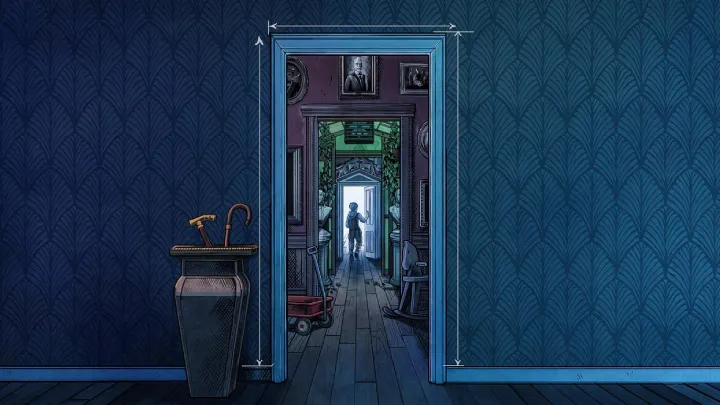




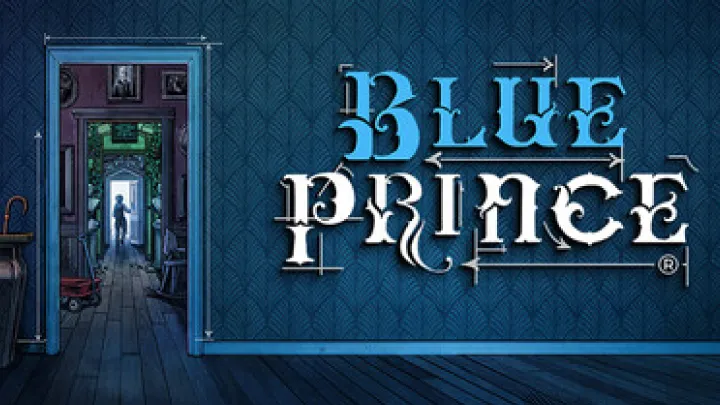
Blue Prince is not a game about exploration; it is a game about the terrifying responsibility of creation. While many roguelike titles focus on the randomness of combat or the luck of a loot drop, Blue Prince places the player in the role of an architect tasked with building the very manor they must navigate. As you step into the sprawling estate of Mt. Olympus, you are not just a guest—bidding to inherit a legacy—you are the primary cause of your own structural entrapment. The game forces a confrontation with the "Architect’s Dilemma," where the desire for utility constantly clashes with the inescapable geometry of a shifting floor plan.
The central issue that defines the Blue Prince experience is the Constraint of Spatial Logic. In this game, every room you place is a permanent commitment for that day’s run. You are granted a hand of "Room Cards," and with every door you open, you must choose how the house expands. This creates a deep, systemic tension: do you optimize for short-term gain (finding a kitchen for food or a study for lore) or do you build for long-term structural integrity? The deeper you delve into the 40+ days of the inheritance trial, the more the game reveals that the manor is not just a house, but a physical manifestation of your own decision-making flaws.
The Genesis of the Draft: The Weight of the First Foundation
The opening moments of a Blue Prince run are deceptively simple. You stand in the foyer, a handful of cards in your inventory, and three doors ahead of you. This stage represents the "Purity of Potential." At this point, the spatial logic is wide open. You can afford to place a "Grand Hallway" or a "Library" without worrying about boxing yourself in. However, the game subtly introduces the concept of Resource Scarcity through "Room Value." Every room has a point cost, and your budget is the ultimate arbiter of your architectural ambition.
The specific issue at this stage is the "Early-Game Over-Extension." Players are often tempted to place high-value rooms early to reap immediate rewards, such as permanent stat boosts or key items. But by doing so, they consume their "Design Points" (DP) too quickly, leaving them with low-tier "Empty Corridors" or "Closets" for the rest of the floor. This creates a narrative of architectural regret that mirrors the game's themes of a decaying family legacy—building something beautiful on a foundation of sand.
The Anatomy of a Room Card
- Draft Cost: The amount of DP required to "manifest" the room.
- Utility Tag: Does the room provide "Comfort," "Knowledge," or "Utility"?
- Connection Nodes: The number of doors the room provides (1 to 4).
The Geometric Trap: The Physics of Dead Ends
As the sun begins to set on a specific day in Mt. Olympus, the manor begins to tighten its grip. This is where the Spatial Logic Constraint becomes a physical threat. In Blue Prince, you cannot delete a room once it is placed. If you place a "Dead End" room—a room with only one entrance—in a critical junction, you have effectively severed a limb of your manor. The game turns into a high-stakes puzzle where a single misclick can end a run by making the "Goal Room" unreachable.
This issue is exacerbated by the "Fog of Draft." You only see three potential rooms at a time. If none of those rooms have the required door orientation to connect to your existing structure, you are forced to discard cards or place a "Maladaptive Room." This creates a sense of claustrophobia that is rare in the roguelike genre. The house feels like it is breathing, shrinking around your mistakes, forcing you to use your limited "Tools" (like hammers to break walls) as precious bail-outs for poor planning.
The Economy of Rest: The Kitchen and the Bedroom Paradox
Survival in Blue Prince is tied to the "Energy Meter." Every door opened and every action taken drains your character’s stamina. This introduces the Logistical Optimization problem. To survive, you need to find "Restoration Rooms" like Kitchens or Bedrooms. However, these rooms are rare and often carry high draft costs. The player is caught in a cycle of "Building to Survive" versus "Building to Progress."
The Hierarchy of Needs in Mt. Olympus
- Sustenance: Finding the Kitchen early to keep the energy bar full.
- Intellect: Accessing the Study to decode the clues required for the day's puzzle.
- Progression: Finding the "Blue Room" or the exit to the next floor.
If you focus too much on sustenance, you build a sprawling, inefficient house that leaves you with no energy to reach the goal. If you focus solely on the goal, you risk collapsing from exhaustion before you can turn the final key. This balancing act is the core of the game's strategic depth.
The Lore of the Walls: Narrative as a Structural Blueprint
Unlike many games where lore is found in discarded notes, in Blue Prince, the house is the lore. The specific issue here is Narrative Gating. Certain rooms will only appear in your draft deck once you have solved specific environmental puzzles or discovered "Family Secrets." This means your architectural options are directly tied to your understanding of the story.
Decoding the Manor
The manor of Mt. Olympus is divided into thematic wings. The "Vanguard Wing" reflects the family's military history, featuring armories and barracks. The "Observatory Wing" reflects their obsession with the stars. Each wing has its own "Grammar of Design." You cannot build a coherent house without understanding the "Language of the Architect." If you mix styles haphazardly, the game penalizes you with "Structural Instability," causing random room effects that can hinder your progress.
The Toolset of the Desperate: Breaking the Rules of Space
When the geometry fails, the player must turn to their "Permanent Upgrades" and "Inventory Tools." The Systemic Breaking of the game's own rules is a crucial late-game mechanic. Items like the "Master Key" or the "Sledgehammer" allow you to bypass the constraints of the Room Cards. However, these tools are finite. The issue becomes one of "Emergency Management."
Using a hammer to create a door where none exists is a powerful move, but it leaves you vulnerable for the next floor. This creates a "Debt of Utility." You are constantly borrowing from your future self to solve the spatial problems of the present. This thematic resonance with "inheriting a debt" is one of the most brilliant aspects of the game’s design, turning a simple inventory choice into a moral and strategic weight.
The Mystery of Room 46: The Ultimate Architectural Goal
Every run in Blue Prince is a search for the elusive "Room 46." This room represents the "Singularity of Design." It is the perfect room that solves the mystery of the inheritance. However, getting there requires a perfect alignment of draft luck and geometric foresight. The issue here is the Statistical Wall. As you unlock more rooms, the "Pool" of potential cards grows, actually making it harder to find the specific rooms you need for high-level puzzles.
The Card Pool Problem
- Early Game: High probability of seeing basic corridors.
- Mid Game: Diluted pool makes specific "Puzzle Rooms" harder to find.
- Late Game: The need for "Synergy Rooms" (rooms that buff adjacent rooms) becomes mandatory.
This "Dilution of Choice" forces the player to become a master of "Deck Thinning" and "Draft Manipulation," adding a layer of traditional card-game strategy to the architectural simulation.
Environmental Storytelling: The Visual Language of Decay
The visual issue in Blue Prince is the Contrast of Opulence and Rot. As you move deeper into the manor, the rooms become increasingly surreal. A "Library" might be flooded; a "Parlor" might be overgrown with blue flora. This is not just aesthetic; it affects the "Room Traits." A flooded room might drain more energy to cross, while an overgrown room might hide "Hidden Passages."
The player must learn to "read" the visual cues of a room card before placing it. A "Dilapidated" tag on a card means it will have lower utility but might be cheaper to draft. Choosing to build a "Ghetto of Rot" in one corner of your manor to save DP for a "Golden Wing" elsewhere is a common—and often tragic—strategy.
The Social Architecture: NPCs and the Ghostly Inhabitants
Mt. Olympus is not empty. You encounter other "Contestants" and ghostly staff. The issue here is Interpersonal Influence on Space. NPCs will often offer to "Trade" rooms with you or sabotage your floor plan. A rival might force a "Trap Room" into your deck, or a friendly maid might offer a "Secret Passageway" card.
Managing these relationships is another "Layer of Construction." You are not just building with wood and stone; you are building with social capital. If you alienate the staff, your draft options become "Hostile," featuring rooms that actively hinder your movement or drain your resources.
The Final Blueprint: The Culmination of the Trial
The final days of the 40-day trial represent the "Absolute Constraint." By this point, the player's permanent upgrades and the manor’s "Global Logic" have reached their peak. The issue is the Convergence of Mechanics. You are no longer just placing rooms; you are managing a complex ecosystem of energy, luck, tools, and narrative clues.
The final floor is often a "Mega-Structure" that requires you to connect disparate wings of the house into a single, unified loop. Failure to do so results in a "Fragmented Manor," which is narratively interpreted as your failure to claim the inheritance. The pressure is immense, as the game's permadeath elements (though mitigated by the "Day" system) mean that a single structural error can undo hours of meticulous planning.
Conclusion: The Infinite Manor of the Mind
Blue Prince stands as a unique achievement in game design because it elevates the act of "mapping" from a player-led activity to a core gameplay mechanic. The central issue—the Constraint of Spatial Logic—is not a flaw, but the very engine of the game’s brilliance. It forces the player to live with their choices in a way that few other titles dare to do. You are the architect of your own salvation or your own doom.
In the end, Mt. Olympus is a mirror. It reflects your caution, your greed, your foresight, and your panic. Every "Blue Prince" who enters the manor leaves behind a different blueprint, a different story written in corridors and doorways. It is a game that proves that in the right hands, geometry can be as evocative as any dialogue, and a well-placed door can be the most satisfying "Power-Up" in gaming.